Reinforcing Surfaces with a Versatile Fiberglass Mesh Sheet
Release time:2026-02-10 Click:14
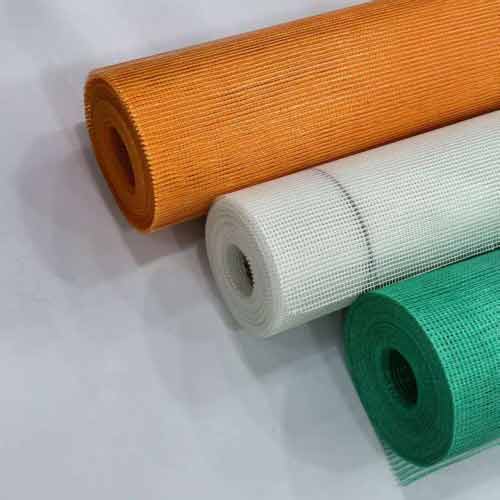
In construction and renovation, preventing cracks and strengthening surfaces is a perpetual challenge. The fiberglass mesh sheet has become an indispensable tool for this purpose, serving as a lightweight, high-tensile reinforcement layer embedded in plaster, stucco, concrete, and tile adhesives. Made from woven fiberglass yarns coated with an alkali-resistant compound, this mesh provides dimensional stability and crack-bridging capabilities without adding significant weight or bulk to the substrate.
The primary application for fiberglass mesh sheet is in drywall finishing, particularly over joints and corners. When embedded in joint compound, it prevents the brittle compound from cracking as the building settles or experiences thermal expansion. It is far superior to paper tape in its resistance to mold and its ability to span small gaps. For exterior use, a heavier-grade mesh is embedded into the base coat of Exterior Insulation and Finish Systems (EIFS) or synthetic stucco, where it must withstand weathering and structural movement.
This material is also critical for tile and stone installations. When used as an uncoupling membrane or within a thick-bed mortar, the mesh distributes stress and prevents cracks in the tile work from transmitting to the substrate below. It is essential for tiling over existing cracked concrete or for large-format tile installations where substrate movement is a concern. Its flexibility allows it to conform to curved surfaces as well.
The key to its performance is the alkaline-resistant coating. Cement-based products like plaster and mortar are highly alkaline and can degrade standard fiberglass. The special coating protects the glass fibers, ensuring the mesh retains its strength over the long term. Mesh sheets come in various weights and densities; a denser, heavier mesh (e.g., 4oz or 6oz per square yard) is used for exterior or high-stress areas, while a lighter mesh is suitable for interior drywall.
Installation is straightforward but requires proper technique. For drywall, the mesh is cut to length, pressed into a layer of wet joint compound, and then covered with additional compound. For exterior walls, it is laid into a fresh base coat and troweled over until fully embedded. The mesh must be laid flat without wrinkles and with adequate overlap between sheets to create a continuous reinforcement layer. It should never be left exposed, as UV light can degrade the fibers.
In summary, the fiberglass mesh sheet is a simple yet revolutionary product that enhances the durability and longevity of finished surfaces. By providing a flexible, strong skeleton within brittle materials, it effectively manages stress and movement. Whether used by a drywall taper, a stucco applicator, or a tile setter, this unassuming sheet is a key component in creating seamless, crack-resistant walls, ceilings, and floors that stand the test of time.
Previous article:Waterproofing Protection with Fiberglass Mesh Waterproofing
Next article:High-Strength Fiberglass Mesh for Joints
Hot products
Mobile: +86 15369229308
Email:metalproducts2025@163.com
Email:565169797@qq.com