Optimizing Fiberglass Mesh Material for Industrial Uses
Release time:2026-02-25 Click:15
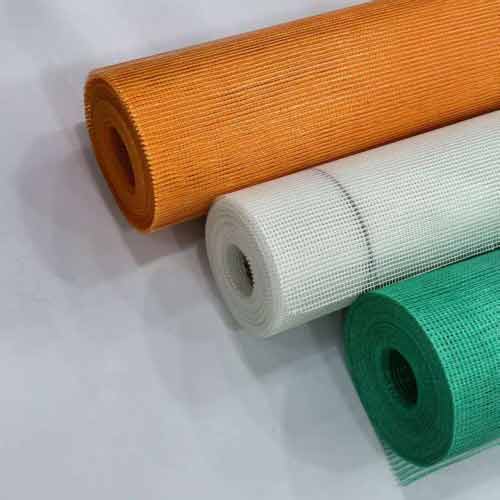
The versatility of fiberglass mesh material has made it indispensable across a wide range of industrial, commercial, and residential applications, from reinforcing composites and plaster to screening particles and protecting surfaces. This synthetic textile material offers combinations of strength, chemical resistance, and thermal stability that organic fibers cannot match, while its open construction enables filtration, drainage, and ventilation functions that solid materials cannot provide. Understanding fiberglass mesh specifications and applications enables users to select appropriate products for their specific requirements.
The composition of fiberglass mesh material provides the performance characteristics that make it valuable across diverse applications. Fiberglass is produced by forcing molten glass through fine apertures, creating continuous filaments or staple fibers that can be woven into textiles. The glass composition can be adjusted to provide different properties, with E-glass providing general-purpose performance and specialty glasses providing enhanced strength, chemical resistance, or thermal resistance. The woven construction creates stable mesh structures that maintain their dimensions and properties under stress.
Mesh specifications for fiberglass mesh material include weave pattern, mesh count, thread diameter, and open area, each affecting the performance characteristics of the finished product. Plain weave patterns provide the highest stability and are most common for general-purpose applications. Twill and satin weaves offer greater flexibility and are used for applications requiring conformability to curved surfaces. Mesh count, measured in threads per inch or centimeter, determines the opening size and density of the mesh. Thread diameter affects both strength and the openness of the mesh construction.
Reinforcement applications for fiberglass mesh material utilize its high tensile strength and dimensional stability to enhance the performance of composite materials, plaster, and masonry. Composite reinforcement uses fiberglass mesh as a structural component in fiberglass-reinforced plastic parts, providing strength without the weight of traditional reinforcements. Plaster reinforcement uses mesh embedded in gypsum or cement plaster to prevent cracking and add tensile strength to brittle finishing materials. Masonry reinforcement uses mesh as crack control in concrete slabs and masonry walls.
Filtration and screening applications for fiberglass mesh material take advantage of the precise opening sizes and chemical resistance of the woven fabric. Industrial filtration uses mesh with specific opening sizes to separate particles from liquids or gases in processing applications. Particle screening uses mesh to classify materials by size in mining, aggregate, and food processing operations. Insect screening uses fine mesh in window and door screens to exclude pests while allowing ventilation.
Surface protection applications for fiberglass mesh material use the durable, puncture-resistant properties of the fabric to protect underlying surfaces. Safety screen applications use impact-resistant mesh in windows and guards to protect against accidental impact. Debris containment uses mesh to capture falling materials during construction and maintenance activities. Temporary enclosure uses mesh to contain dust and debris while maintaining ventilation in renovation projects.
Installation considerations for fiberglass mesh material depend on the specific application and the conditions at the installation site. For reinforcement applications, proper embedment in the matrix material ensures effective load transfer between the mesh and the surrounding material. For screening applications, proper tensioning and support prevent sagging and maintain the intended opening sizes. For protective applications, adequate attachment prevents displacement while allowing for thermal expansion and contraction.
Previous article:Reliable Waterproofing: The Role of Fiberglass Mesh in Moisture Protection
Next article:Reinforcing Construction Materials with High-Strength Glass Fiber Mesh
Hot products
Mobile: +86 15369229308
Email:metalproducts2025@163.com
Email:565169797@qq.com