Reinforcement Fiberglass Mesh: The Key to Stronger Constructions
Release time:2026-02-12 Click:20
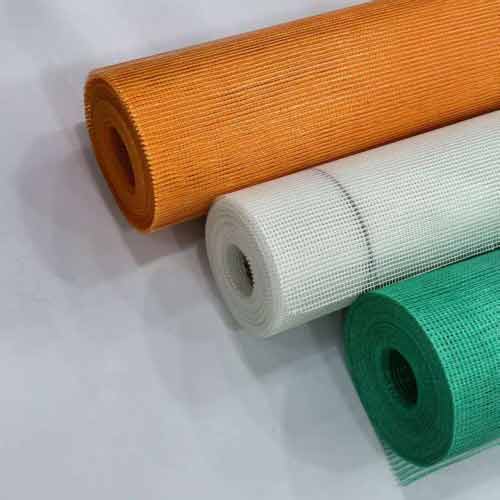
Reinforcement fiberglass mesh has revolutionized construction by providing a lightweight, corrosion-resistant, and high-strength solution for reinforcing concrete, plaster, and masonry. Woven from alkali-resistant glass fibers, this mesh distributes tensile stresses evenly, preventing cracks and enhancing the structural integrity of walls, floors, and facades. Its ability to bond seamlessly with cementitious materials makes it indispensable in modern building practices, from residential renovations to large-scale infrastructure projects.
Material composition is engineered for durability. The mesh comprises continuous filament glass fibers coated with a zirconia-based alkaline-resistant sizing, enabling it to withstand pH levels up to 12 without degradation—critical for concrete, which has a high alkaline content. The fibers are woven into a grid pattern (typically 4x4 mm to 10x10 mm mesh size) with high tensile strength (3000–5000 N/5 cm), allowing it to resist stretching and tearing under stress. This structure acts as a skeletal framework, holding cementitious materials together and redistributing loads to prevent localized failures.
Application diversity spans multiple construction phases. In concrete reinforcement, the mesh is placed within the formwork before pouring, controlling plastic shrinkage cracks and enhancing flexural strength. For external thermal insulation composite systems (ETICS), it is embedded in the adhesive layer between insulation boards and render, preventing cracks caused by thermal expansion or substrate movement. In masonry, it reinforces mortar joints, reducing the risk of wall collapse under seismic activity. Even in decorative applications, such as GFRC (glass fiber reinforced concrete) sculptures, it provides the tensile strength needed for complex shapes.
Ease of installation accelerates project timelines. Unlike steel mesh, fiberglass mesh is lightweight and flexible, allowing for quick cutting and shaping with standard tools. It does not rust, eliminating the need for protective coatings or frequent inspections. When embedded in wet concrete or plaster, it bonds chemically, becoming an integral part of the structure. Contractors appreciate its compatibility with automated application systems, reducing labor costs and ensuring consistent coverage.
Sustainability and cost-effectiveness further boost its appeal. Fiberglass mesh is made from abundant raw materials (silica sand) and is 100% recyclable, contributing to green building initiatives. Its long lifespan (50+ years) reduces maintenance and replacement costs, while its ability to minimize material waste (by reducing the need for thick concrete sections) lowers embodied carbon. For projects in coastal or chemical environments, its corrosion resistance outperforms steel, avoiding costly repairs.
Reinforcement fiberglass mesh embodies the evolution of construction technology toward smarter, more resilient materials. By enhancing strength, durability, and sustainability, it empowers builders to create structures that stand the test of time, proving that innovation in reinforcement can redefine the limits of architectural possibility.
Previous article:Exterior Wall Reinforcement with Galvanized Stucco Mesh
Next article:The Utility of Mesh Tape in Repairs
Hot products
Mobile: +86 15369229308
Email:metalproducts2025@163.com
Email:565169797@qq.com